
Audio: Sherburn Oral History Recording 6 Jun 1990
Audio Library
Memories of a Tom Pudding Tug Skipper
Goff and Eileen Sherburn
Introduction
This oral history recording was made on 6 June, 1990. We do not know the name of the female interviewer but the stars were Goff and Eileen Sherburn, of Goole.
About Goff and Eileen
Godfrey Sherburn, known by everyone as Goff, was born in Thorne, Yorkshire in 1931. He was nineteen when he married his sweetheart, eighteen year old Eileen Martin at Goole Parish Church in May, 1951. They went on to have a family of four daughters and one son.
Goff’s working life was largely spent working on the Aire and Calder Navigation as skipper of a Tom Pudding tug.
Goff passed away peacefully at home in December 2014 at the age of 83 years.
Eileen lived the life of a conventional wife and mother until she became a social worker and did a social sciences degree at Hull University. After dealing with illness for many years Eileen passed away peacefully at home at the age of 92 in 2024.
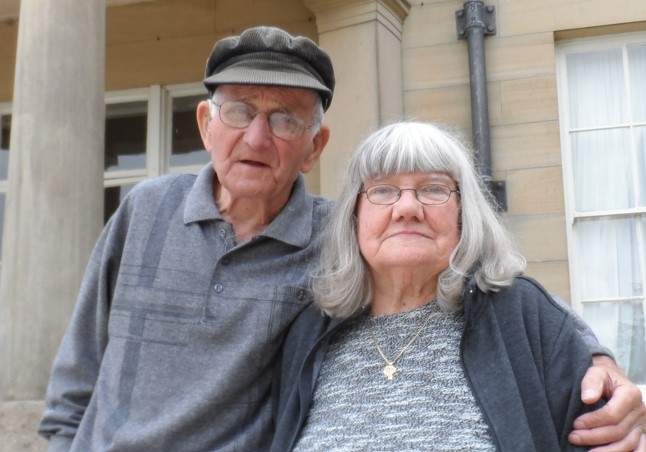
This is the full recording and transcript of the interview with Goff and Eileen Sherburn. Duration 29 minutes 30 seconds.
Summary of interview
During an interview conducted on June 6, 1990, Goff Sherburn recounts his various experiences while working as a tug skipper, including the unique task of moving the number four coal hoist through Goole docks for repairs. Sherburn discusses the demanding nature of his work, often involving long hours and seven-day weeks, which significantly impacted his time with his family, prompting him occasionally to take his children on trips to spend time together. Furthermore, he shares anecdotes about the harsh working conditions, including breaking thick ice during freezing winters, and fond reflections on how his profession, though challenging, became an integral part of his and his family’s lives, contributing to a unique heritage.
TO HEAR THE RECORDING PLEASE PRESS THE BLUE PLAY BUTTON BELOW.
Tape 21 - Full interview with Goff and Eileen Sherburn: Audio automatically transcribed by Sonix
Tape 21 - Full interview with Goff and Eileen Sherburn: this mp3 audio file was automatically transcribed by Sonix with the best speech-to-text algorithms. This transcript may contain errors.
Interviewer:
This interview with Goff Sherburn took place on the 6th of June 1990.
Goff Sherburn:
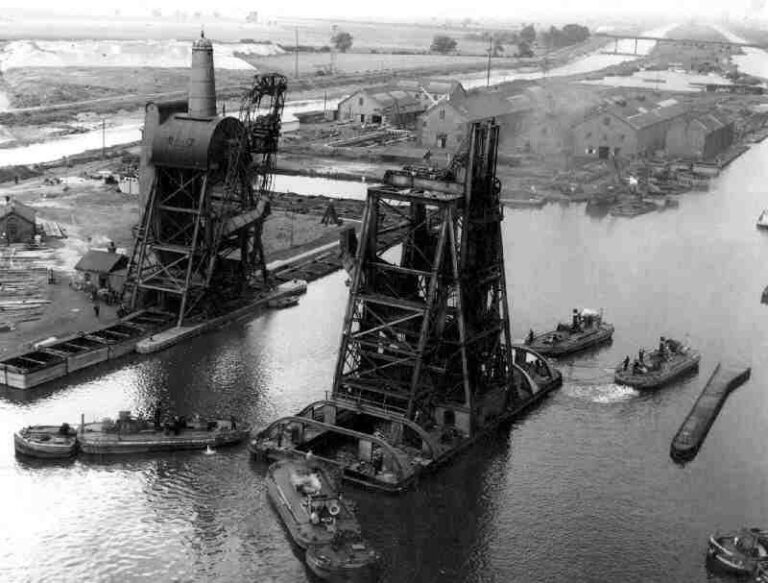
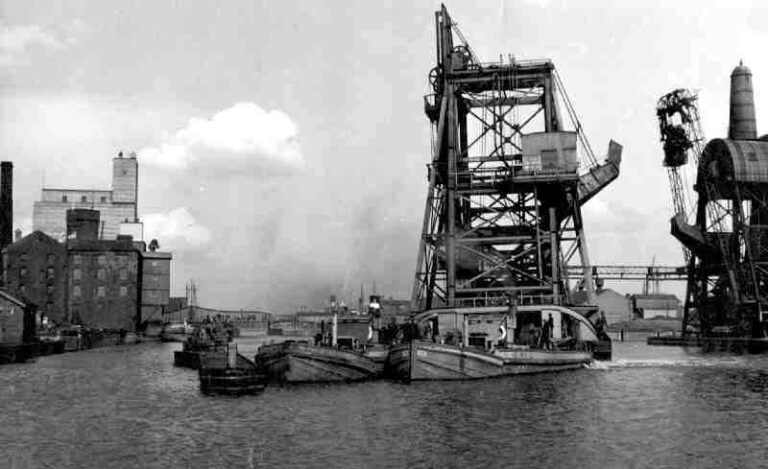
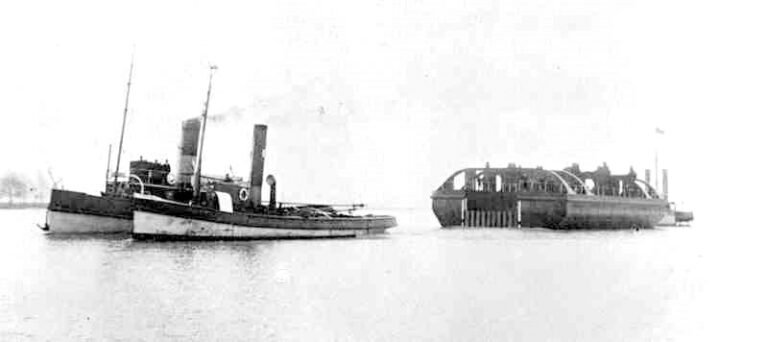
I don't know how long it'll be ago. This is the problem. We actually towed number four hoist, coal hoist, which was floating hoist, round Goole docks, through South Dock Bridge and Lowther Bridge, with no room to spare at all it actually just did go through them. And put it in the dry dock on the river front there in number two hoist. Uh, that was unique because it was, I don't think it had it had been moved once before in it's 100 years existence and that was from West Dock to where it was at, to Ward's Mill. So that was unique because I don't think anybody ever remembered it being done before.
Interviewer:
Why was it moved? Why was it moved?
Goff Sherburn:
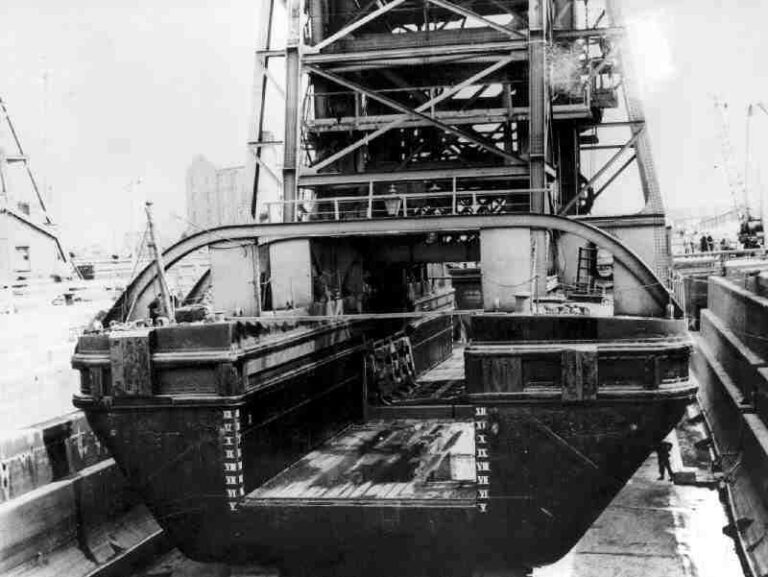
They wanted to do some repairs she'd been there that long, repairs on the hull, because it was like a ship's hull. Underneath the water, do some repairs on there, and also do some repairs on the berth where it was at and to be dredged out. And through the years it had been just packing mud and coal down and packing it down every time it rolled, because it did. When every time you tipped a pan it was a massive operation and it had packed coal and muck that solid that it was actually on the bottom. It wasn't flexible and it had to be flexible to, to operate. It was built that way. So that was, you know, that was unique in itself. And I thought, I suppose, there'll not be many people now around that will remember that actually.
Interviewer:
Did you actually skipper that operation?
Goff Sherburn:
Oh skipper of a tug, yeah, skipper of a tug called ?????, It finished up as ???????, it was number 17 at the time. So....
Interviewer:
So what you were saying was you sometimes took your children on a trip on the boat.
Goff Sherburn:
Yeah.
Interviewer:
Because you very rarely saw them.
Goff Sherburn:
Well that's right. As your kids get old enough to understand. And, you considered it reasonably safe, then yes you'd take a kiddy, not more than one at a time, but you certainly took you know. Otherwise you didn't have any time with them at all. That's the only time they could. And the kiddies grew up with them memories. They loved every minute of it. You learn after how much they appreciated it. You didn't know at the time. But our Jane, which, she's barely able to talk about it all, ain't she? She considers now that she got an experience that most kids will never have. Which is right. They can't have anyway now 'cause there's no more Tom Puddings. It's...
Interviewer:
So you missed your first two children?
Goff Sherburn:
Yeah, I saw very little of them, in fact, is that right? They was mainly in bed when you got home overnight. If you were a down back then, you'd no chance. You know, it was, uh. And at the time, I think things were so bad that you had to do that sort of try and get just that little bit better living than, than other people. And I'm not being snobbish about that. I mean, the chance was there to earn a few bob, and you'd need to go for it. You can have an extra fish and chip on a week, or summat, you know what I mean? Like, because that's what it amounted to.
Interviewer:
So did you sometimes work Sundays overtime?
Goff Sherburn:
Oh yeah, quite a lot.
Interviewer:
So that would be a seven day a week.
Goff Sherburn:
Seven day a week, yeah. Uh, and as I say, there was no hours. There was no set hours at all. You could go out at 3 or 4 o'clock in the morning, or 2 o'clock in the morning, even, and get back at midnight and back home, pick a few more sandwiches up or a bit more food. And away again at 1 o'clock. It was,yeah, you wouldn't know how you did it, but you did. And the thing was, when you got aboard, you got on all right. You could get a couple of hours sleep because there was four of you, so you sort of spelled it. Once you got your train on and you knew where you're going to have a couple of hours, and you got to leave your mate and let him have a couple of hours, and, and that's, that's the only way you could do it until you got where the work started again. So that would apply up to say possibly Ferrybridge or Castleford. That would apply, and it was about what, 5 or 6 hours. So you didn't get a lot of sleep if that's, you didn't get that, but it did give just a little break. It just let you refresh a little bit. Then when you got to Castleford your work started again. So there was no chance after that until you got back inside Ferrybridge again at night. Coming back then you might go another couple of hours.
Eileen Sherburn:
We used to be able to contact the office in Goole. I mean, the amazing thing was that somebody from the office used to come round every teatime at 4 o'clock and bring their orders. So the wives used to go out and buy in the pack up for them to take away. And also, if we were lucky, then we could ask the chap who came round with the orders what time they would be down. So in summer, when it was warm and the nights were light, we would go down to Albert Street with the kids and then we would stop, they would stop at the Wheatsheaf for a pint, and we would have the kids outside, and the kids would have, have a drink there with their dads before we all came home together. And then and that was as much social life as we had for years and years and years. You know, it was, uh, amazing.
Interviewer:
Did you wives make a circle and get together?
Eileen Sherburn:
No. Funnily, funnily, the only time the wives ever were out together socially was when the men were. If, um, if on the odd occasion, there was. I mean, we didn't. we didn't have any Christmas. Oh. They started a Christmas function didn't they, a Christmas dinner.
Goff Sherburn:
Yeah. But that was very late on.
Eileen Sherburn:
Very late on before it finished. And they would book somewhere, be it Leeds or wherever, somewhere in British Waterways area, um, for wives. And we went. But it was only I think it was only 2 or 3 years before the job, um, almost folded up. But but the wives never, funnily enough, I think they just all had the children, you see. So nobody had time, really. And, um, we were all very much from different, um, social lifestyles, you know. I mean, it was, uh, it was amazing. I mean, I were, not even the children didn't grow up together or know each other, did they?
Goff Sherburn:
No. See, we very rarely met as a group of men, uh, everybody, no you never, ever met because there was always somebody who were working so you could get maybe 4 or 5 crews going for orders. So you had a day at Goole for any reasons, and you could get 4 or 5 crews, go for your orders at 4 o'clock in the afternoon instead of the chap bringing them down on the bike. And that was the most you would ever see of anybody apart from passing one another on canals or on the rivers.
So really, all your sort of brotherhood was on the actual boats, wasn't it?
Goff Sherburn:
That's right. Yeah, yeah.
Eileen Sherburn:
If they were very late down any time and we suspected there were if we were worried there'd been an accident, which we knew we would have been notified officially. So the suspicion was that they might have stopped in the pub. We would we as the time went on, we all, we all had telephones, didn't we? We didn't early on, but we eventually had telephones installed and we used to ring each other did the wives and say, is so-and-so home yet? No, no, I bet the so-and-so and we'd have a little, a little groan like that but that was, that was as far as as it went, you know. Yeah.
Interviewer:
I suppose you would need to wind down, perhaps, or relax after the day?
Goff Sherburn:
I can never remember that part of it. I think, uh, it's going back when? There weren't a lot of brass, obviously, and you just had a will to go out and get it. If you got a chance for another trip, then you welcomed it. You didn't shy off it at all because it was more money, it was another pair of shoes for your kids or whatever. I mean, we're not talking about a lot of money, you're talking about going home and giving your wife about £4 or £4.50. She thought she'd had a good wage. That's right. isn't it.
Eileen Sherburn:
And when coal was rationed, you once filled your empty. Um. You had a tin. There were tin pack up boxes. Yeah.
Goff Sherburn:
Tin box behind you.
Eileen Sherburn:
Food supply was rationed and we didn't have any. And that was, that must have been very, very early because it must have been about 1953. It was before. And coal was very, very scarce. Or it could have been during the miners strike. It was perhaps more likely to be. No. It was very early on. It was very....
Goff Sherburn:
Early on, yes.
Eileen Sherburn:
...early 50s and Goff filled his, um, which wasn't very much coal, but...
Goff Sherburn:
We're only talking about.
Eileen Sherburn:
A...
Goff Sherburn:
Half a stone at the most.
Eileen Sherburn:
..policemen, followed you home, didn't he? It was quite. I mean, it was terrible then, but now we laugh about it. And so Goff decided instead of coming straight home, he took him right round riverbank and walked and walked, hoping he'd lose him. But he didn't. He followed him all the way home, and asked what he'd got in this box. He didn't know that he was on barges or whatever. And, um, you had to go to court, didn't you? But it was dismissed. It was dismissed.
Goff Sherburn:
It was 15 shillings costs, though, just same. Yeah. And the thing was, it was so stupid that it was fact because a friend of mine at the time was on the Goole Times, Spud Taylor. Been in forces with Spud, and he wanted to take the case up because they couldn't summons me, in actual fact, because it wasn't valued at a shilling, it was valued at less than a shilling.
Eileen Sherburn:
Ten pence it was, I remember it was ten pence.
Goff Sherburn:
They charged me 15 shillings. That was for witness fee and costs of court. And the stuff wasn't valued at a shilling. They couldn't pinch me for it, quite frankly. But I didn't know that at the time, and I weren't fully conversant with any laws of any description, quite frankly. And Spud, I don't know if he's an old man now or not. But he was at the time he was on Goole Times. He came down to see me. He said, "I'll take it up". I said, no, let go, it's finished, forget it. You know it's done. And I'm still glad that I said that. But when we came out of court, there's our foreman, Harold Hobson, there and he's saying, "Ee Gol, lad you got away with that. How the hell did you get away with it, Harold? I've just paid your wages for the day. And the thing was, they couldn't even prove where the coal had come from. I mean, the witness stood up in court, really, and said, well, it looks like the coal we've been tipping. It looks like it, didn't say it was it.
Interviewer:
How can they differentiate?
Goff Sherburn:
Well, there's different seams int there, causing of the matter. There's different seams and experts can tell which seam coal come from. You see Barnsley seam which was from Hatfield and that area. Thorne. That was all Barnsley seam. You Royston's seam which was Castleford area. You know the seam which was your Park, your Wakefield area. And they knew your experts could tell by the texture of it which it was. But you need an expert to do it. Not just you standing up and saying, well, that looks like what come on our lorry yesterday. Do you know what I mean? That's true. Yeah. And I was supposed to be lucky because I'd got away with it. Well, I was, because I didn't lose my job. I would've lost my job. And I still think about it. I still laugh about it. Most I want to see a policeman, I don't know why. Because, as I say, it wasn't valued at a shilling and they couldn't legally summons me because it wasn't valued at a shilling. And on top of that, there's no way could that bloke have identified that coal. So you talk about funny stories. That was a beauty. And that was right. And I saved that for later, didn't I? I don't know where it eventually finished up.
Interviewer:
But did it put you off taking coal? Bringing coal home? Did it put you off or?
Goff Sherburn:
No. Uh, well, yeah, I'd say it did. But the beauty of that was.
Eileen Sherburn:
They issued permits after that, didn't they, They gave you permits to have coal sweepings.
Goff Sherburn:
Sweepings. Just for sweepings, yes.
Eileen Sherburn:
You could have a permit once a month, for sweepings after that.
Goff Sherburn:
For two bags. For two and a half pence now.
Eileen Sherburn:
After that.
Goff Sherburn:
I don't have friends now because that.
Eileen Sherburn:
That was a bonus. That was super.
Goff Sherburn:
That that was good because that were. Yeah.
Interviewer:
How big a bag are you saying? How big a bag?
Eileen Sherburn:
As big as you could carry. The bigger the bag, the better.
Goff Sherburn:
Didn't have to be weighed or owt like that, just said two bags of sweepings, no matter how big. Two 16 stone bags. But the beauty of the one that we just said was the fact that the chap that was with me, which was Charlie Pettigan, he picked a bloody great lump about this size. Put it under his arm and rode off the docks with it. Nobody said nought to Charlie didn't even stop him. And his is not covered up it's under his arm. And I couldn't say that in court, you know what I mean? There's no way. And there's Charlie there laughing like hell when he saw me, he said he made a bloody good Friday. That's. And mine didn't because they searched our coal house, didn't they, at two o'clock in the morning. They kept me in nick.
And it was empty.
They kept me, that's only time I was ever a criminal. They kept me in nick while they said, while they came home and knocked you up, didn't he. And ???????? Trick searched the bloody coal house to make sure we'd no coal. Hasn't he, never seen owt like it.
Eileen Sherburn:
I mean what other temptation when there was no coal and you'd young children. And it was cold, it was freezing cold.
Goff Sherburn:
I didn't take it off. And we picked it off the floor. We picked up off the floor. Hundreds of times.
Interviewer:
Aren't you there? Yeah.
Eileen Sherburn:
I mean.
Goff Sherburn:
Charlie rode off. The piece of coal he picked up, honestly, it must have been, well, as big as that clock on his, a full square. It's a great big, massive piece. And he put it under his arm, got on his bike and rode away. I put 3 or 4 little pieces in my bag, in my box, Bloody copper followed me eight hours through banks right round.
Interviewer:
What was it a dock policeman? Dock?
Goff Sherburn:
No, no it wasn't. If it had been a dock policeman it would never have happened. Uh, we had a very good understanding with them.
Interviewer:
Sounds good, doesn't it.
Goff Sherburn:
There. Look at the way they got their cup of tea early morning.
Speaker5:
Yeah.
Goff Sherburn:
No. It was. I was just lonely. I think what it was, it was a young policeman at the time. Because I know that when they actually charged me, the police sergeant said, what's all this? So we'll sort it out with him like he's the bloke what's doing it and getting a rollicking. In actual fact, he says, you've got to be stupid. I said, I've got to go on with it now. He's booked it in. He said, I can't do owt about it. He said, but I'll tell you what, buy two tickets for police ball and we'll see what we can do. I said, you can stuff your police ball, I'm finished with police after this. And that is right. But I think he was a young policeman that had just moved to the area and he wanted to make himself a name, but the sergeant did give him a rollicking, in actual fact, while I was there. He said, I can't withdraw it now he's put it through the system, and there's nowt I can do about it, which he had and it had gone through the system before the sergeant came in and I was sat there, you see, with coal. They'd gone down to our house to search the coal house. The sergeant said, what's it all about? And I told him, like, you know, gave him a right mouthful, but it's too late.
Eileen Sherburn:
But none of the wives worked. None of us. None of us were working wives, were we?
Goff Sherburn:
No, no, no.
None of the wives, we were always in when they came with the orders, which if we were out shopping, we used to say, we'd better be back for 4 o'clock because they'll be coming with your dad's orders, you know.
Goff Sherburn:
I mean, people have asked many times why they called them Tom Puddings. Well, I really can't say. People can only, think that they called them Tom Puddings because it was Tom Bartholomew that invented them. And they was like a pudding tin. That's as much as you can say, because nobody can say any other. I've never read a true definition of it that I know of. And I know all sorts of books, and I mean that I've read all sorts of books about it. Uh, I've never yet, quite frankly, met anybody that can remember him pushing them. They said they used to push six. I've actually a photo I reckon I've never talked to anybody that could remember it being done. And I met when I started, which is now, what, 35, 30 odd years ago. I was working with men then that was retiring, and they retired at seventy in them days. They'd to work while they were seventy to get blooming pension off Aire and Calder. Yeah. And if they worked while they were 70, they got a bit of a pension, and when they pegged out, they made them a coffin. Yeah. It's fact. I mean, they're all funny things, but it's fine. It's true. So I've worked with people that he can go back a lot of years, but I've never met anybody yet that said they were pushing. They once said there was a chap in the, Arcade, had a shop. I believe they called him Walker. It wasn't Saul Walker, so he can put that on there. They said he could, but yet when he was questioned, he couldn't.
Interviewer:
He couldn't what?
Goff Sherburn:
Couldn't remember them being pushed. You have a photo of them there in that book.
Interviewer:
Mmm. Yeah, well.
Goff Sherburn:
Of it being done. It's only a pen picture, it's not an actual photo, it's a pen picture.
Interviewer:
Did all the older workers call them Tom Puddings?
Goff Sherburn:
Yeah. Oh yeah. Yeah.
Interviewer:
It goes right back.
Goff Sherburn:
Right back, yeah. Uh, as I said, the only thing I can think of is because Tom Bartholomew invented them and they'd call them Tom's Puddings, not Tom Puddings, Tom's Puddings because they was like puddings. I think that's where it's.
Interviewer:
Did you ever hear any stories about Bartholomew from the old people?
Goff Sherburn:
No. Not really. No. I think the only thing that really I heard about Bartholomew was, quite frankly, that the family still had royalties when the thing was, when the Tom Puddings was in operation, the Bartholomew family had so much a ton, a farthing or something like that, I think that was the royalty that that was passed on to the family right up to them going out of business as far as I know. I couldn't argue on that, that's all. Uh, you never heard him mentioned much at all? Uh, you heard him mentioned more for the work he did for Goole. And I don't mean Tom Puddings like your hospitals and your churches and and that sort of thing. You heard all that. You never heard much about the actual Tom Puddings themselves, whether because they changed so much that they weren't the original, they modified, modified. I mean, the first ones didn't have a steering wheel, they'd two steam rams. One at each side and you worked it by levers and what it did it draw, you put your arm whatever, which one. It pulled the chains taut and sort of formed a bow in the compartment. So they'd go that way, and then you release that and pull the other one, and it went that way. But that's that was the original system, I understand. And so everything sort of changed.
Interviewer:
Is this, um, the actual tug or whatever?
Goff Sherburn:
Yeah. The tug. Yeah.
Interviewer:
Had the steering wheel?
Goff Sherburn:
Yeah. It wasn't worked by a steering wheel and rudder. It was worked by these, these, er, pistons. Steam pistons.
Interviewer:
Manual. Manually. Manually?
Goff Sherburn:
Oh, yeah. You work your levers like that. As I say, there are so many different variations from the originality that the pans was made bigger than what they originally were. I think it was only about six inches, but it was made bigger and they had three deck planks instead of two. There's all sorts of little things. I mean, I could go into all that, which is statistics, but I mean, you've heard of all that, no doubt anyway. But the original ones had two beams instead of one. They had two deck planks instead of three. They had no nutcrackers at all and all sorts of things, you know, that, uh, so they deviated a lot from the actual original thing itself.
Eileen Sherburn:
But while, while they were actually working all those years. It was never looked on as anything special or unique, was it? Uh, it was.....
Goff Sherburn:
Just no you were a bloody nuisance with all the traffic. No, I.
Eileen Sherburn:
No, I mean, I mean in Goole.
Goff Sherburn:
Oh, no, no.
Eileen Sherburn:
In Goole itself, in the community, it was very much taken for granted, and it wasn't even considered that it was only, I mean, in my sociology later on, because I'm in social services now, my sociology, I used all that for Goole when I did a community study, and it was only then that I realized how unique that was. And, um, I had first hand experience and that was smashing. But before, while we were actually living it, I mean, our, our children, the eldest ones are now 30, 36 and 39. And they passed scholarships, they passed 11 plus they went on to university and they have degrees. And when they were at school and anybody asked what their father did, they said, he's on Tom Puddings, very Yorkshire. And if they said, well, what's that? Their mouths opened in amazement. Well he's on Tom Puddings, you know. And, and that was it. He goes down canal and that was as much as they knew.
Goff Sherburn:
But I actually think Sobriety, not Sobriety project now, in its very early days when Bob and them first got that Sobriety off Johnny McGrory, I think they did more to publicise the Tom Puddings as unique than anybody else has ever done. Now I have been, we've been to exhibitions not knowing what was happening, moving to different exhibitions in Birmingham and all over. I've actually seen photos of me on the Tom Puddings in exhibitions. We got a magazine sent to us with a photo of me on the Tom Puddings.
Eileen Sherburn:
I have that actually, I have that, I have that cutting.
Goff Sherburn:
All this has happened to me, but it's never been in Goole. It's always been outside where it's been done. As I say, Birmingham. It was done there.
Eileen Sherburn:
Ray Gosling went down.
Goff Sherburn:
Ray Gosling did it for Goole.
Eileen Sherburn:
Remember doing Gosling's Travels.
Goff Sherburn:
Well. He actually stayed with me. He did a week with me, did Ray but...uh.
Interviewer:
How did that go? I mean, how did that go the week with Ray Gosling?
Goff Sherburn:
All right. Uh, he used very little of it. He filmed for a week, in actual fact, but he used very little of it. Uh, when it all came out.
Eileen Sherburn:
He'd only half an hour for his program.
Goff Sherburn:
But I enjoyed that. It was an experience. Uh, I've been on television about three times. In actual fact, with them, I.
Eileen Sherburn:
Our kids were once watching Blue Peter, weren't they? Weren't. I mean, there were little then, and they were watching, uh, not Blue Peter, Rainbow.
Goff Sherburn:
Rainbow.
Eileen Sherburn:
And they used to come in from school and and sit around here watching telly.
Speaker5:
Well, when I.
Goff Sherburn:
Want it, because you turn it on when they came in a sudden.
Eileen Sherburn:
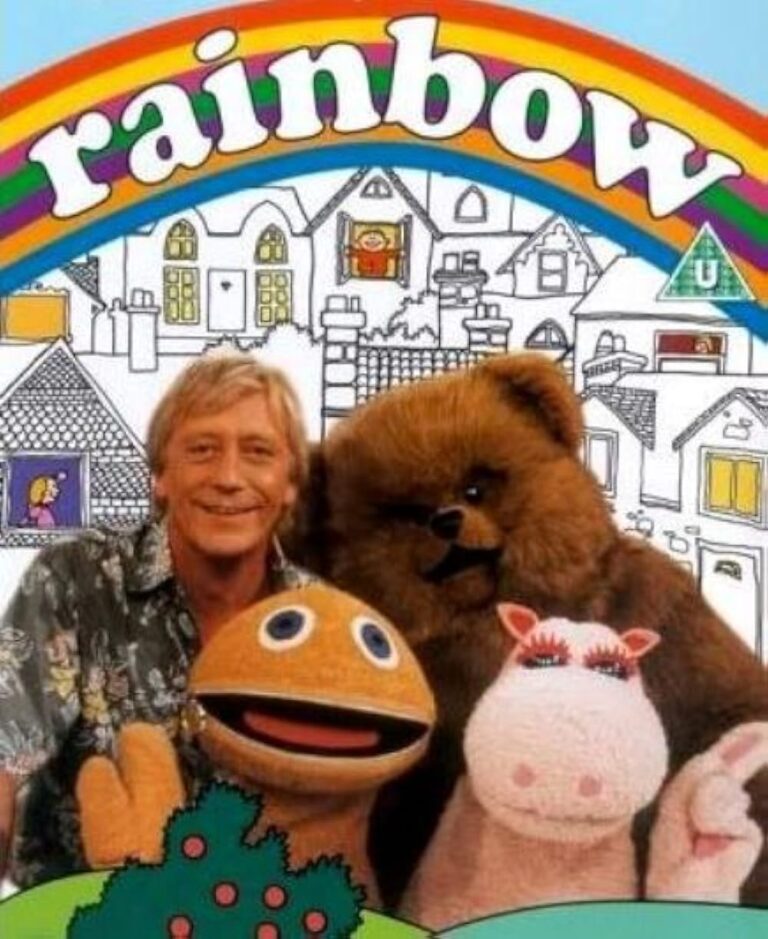
There's this shriek. Mam, mam, quick, there's my dad on telly, there's my dad on telly. And I ran through here and Rainbow, um was doing just, they used to do a little bit and this was on boats and that showed you that, um, pudding just just going. It was only a quick. But it was, it was them. And they went just all mad as being on Rainbow. They thought it was fantastic. You know.
Eileen Sherburn:
They, uh, they were very, very proud of it, now, they're proud of that heritage. And I think.
Goff Sherburn:
The thing that we was most on television for was the, were it 56, 57 when the canals was frozen up. We was working night and day, literally night and day, without stopping to try and keep the canals open. Uh, we was on. we was on the Sheffield and South Yorkshire and I was on news 2 or 3 times, weren't we. We was at it night and day never stopped. Uh, and you couldn't sleep.
Interviewer:
Movement of the....
Goff Sherburn:
Just breaking ice.
Interviewer:
Just breaking ice all the time?
Goff Sherburn:
Just breaking ice. Just breaking ice continually.
Interviewer:
So the traffic could keep going.
Goff Sherburn:
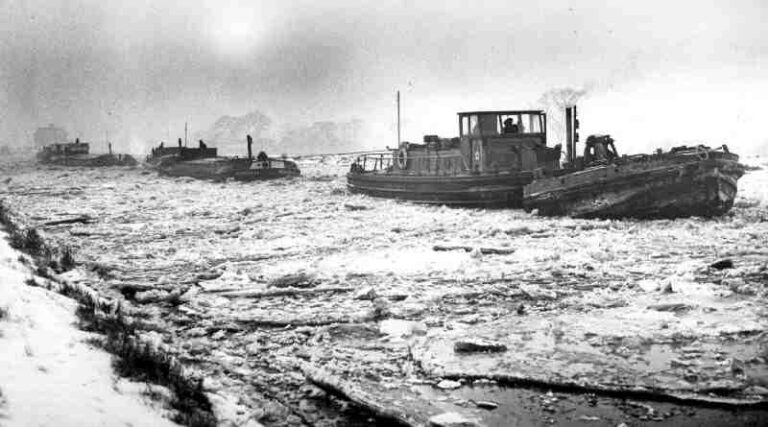
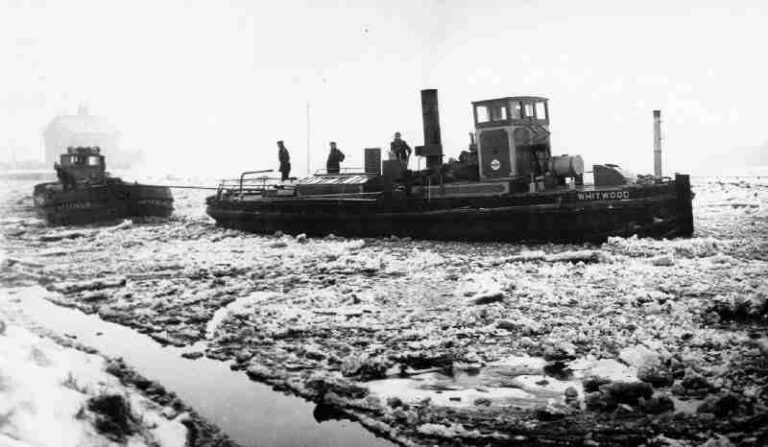
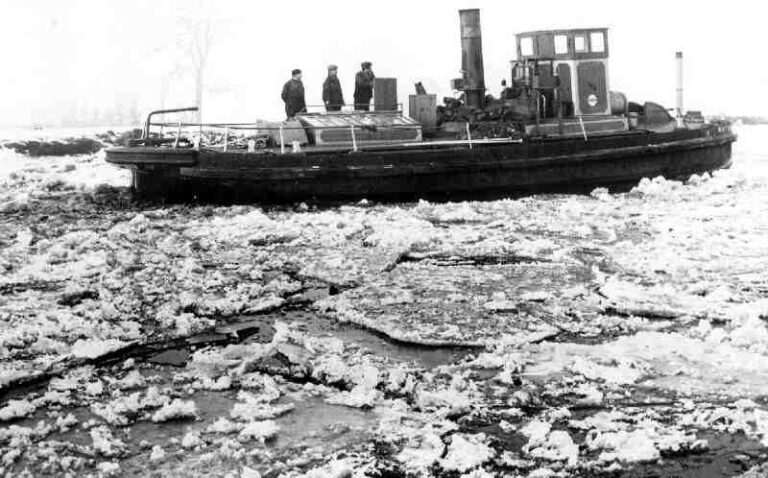
Yeah, to keep the canals open. In end, we did that for about, I think a fortnight on the Keadby Canal. And then we got orders one morning, no pull out, going to have to close, can't keep up. You'd stop for a couple of hours and you'd to get out and get sledgehammer to break your tug out before you could start breaking again. It was freezing that hard, and the ice was that literally that thick was walking alongside of it. In fact, there's some photos somewhere, I'm nearly certain there was a farmer on the ice with an horse and cart.
Speaker5:
Go? Yeah.
Goff Sherburn:
And we was walking alongside the tug as it was breaking ice.
Eileen Sherburn:
And did you get hourly rate for that because I can always remember.....
Goff Sherburn:
Yeah that was good rate of pay.
Eileen Sherburn:
......We used to love it to be ice breaking because there was more money. We the kids. Yeah.
Goff Sherburn:
That was, that was hourly rate. Yeah. That was a damn good job. But unfortunately you couldn't stop. You couldn't get home.
Speaker5:
No, he must.
Interviewer:
You must have been frozen yourself, weren't you? Really cold?
Goff Sherburn:
Yeah, but you always were. It was one of them sort of jobs you couldn't wear jobs to do, wear gloves to do a job effectively. You was dealing with chains so you couldn't really wear gloves. And you can imagine what chains was like covered in frost. I've seen them stick to your fingers. I've seen lads, including myself, crying with their hands being that cold. I've seen skin come off your fingers where they've been stuck to chains. I've seen it more than once. Many, many times.
Eileen Sherburn:
I've seen you come home with your.....
Goff Sherburn:
You couldn't do owt about it, it was your job and you had it to do, you know, you went to a chain to start, you know. Do you know what I mean by chaining them up to tell them Your boots and you've to kick the chain off the deck first because it was frozen. Then when you got hold of the chain it used to stick to your hands and you know, it was one hell of a job, but it was. I've seen you... I would think sometime in my life after I was suffered a hell of a lot of hypothermia, but it wasn't known as such then. You was bloody cold. Really? Yeah. And nowadays you'd have been rushed to hospital. You would. You'd not been able to stop shivering, your teeth been chatting, you couldn't grip anything. And you'd just get down cabin and get a warm mug of tea. Ten minutes later, you were back on deck again at work.
Interviewer:
So did you have facilities for making tea and hot drinks?
Goff Sherburn:
Oh, yeah. Yeah, you had that. And it's a damn good job you had. Really.
Eileen Sherburn:
I'm laughing because they used to...Patto used to take his shotgun and and he used to shoot rabbits and game. And they used to have a pot going.
Goff Sherburn:
Shackle pot which we used to call it. So everything in it, everything that you got.
Eileen Sherburn:
I don't know if I should say, but you used to get turnips and carrots out of farmers' fields.
Goff Sherburn:
No. That's right. Why not?
Interviewer:
They used to have a.
Goff Sherburn:
It was a way of life. We was water gypsies.
Eileen Sherburn:
Water gypsies, really.
Goff Sherburn:
We was water gypsies, was called water gypsies, all watermen was called water gypsies. So...
Eileen Sherburn:
Hello. Hello,mum.
Goff Sherburn:
So it was a way of life. Oh, come in mum.
Interviewer:
It was a case of survival, really?
Goff Sherburn:
That's right. Yeah. You see, when I first started, you had seaman's ration, estuarial seaman's ration books. You could go and knock....
Interviewer:
Seaman's sorry?
Goff Sherburn:
Estuarial Seaman's Ration Books. You could go and knock at any policeman's door in the village, and he would go and knock the store up for you to get your rations, no matter what time it was. So, you know, we are talking about rationing days and things like that, but as I says, it was a way of life. What's that, in the bag? That's it. You could sit, really? You could sit and talk for hours and hours and hours. And I think I could, providing you keep fresh in your memory, you can bring more and more out because there's a hell of a lot. There's a wealth there. Uh. All little things.
Sonix is the world’s most advanced automated transcription, translation, and subtitling platform. Fast, accurate, and affordable.
Automatically convert your mp3 files to text (txt file), Microsoft Word (docx file), and SubRip Subtitle (srt file) in minutes.
Sonix has many features that you'd love including secure transcription and file storage, automated translation, world-class support, share transcripts, and easily transcribe your Zoom meetings. Try Sonix for free today.
NOTES
There are no additional notes yet.
CLIPS FROM THE INTERVIEW
You may prefer to listen to shorter clips of the interview which can be selected from the list below. Ensure you close the player for one clip before you chose another clip, otherwise the sound could become very confusing.
a. Moving No 4 coal hoist (Duration 1 minute 35 seconds).
Summary
In 1952, the floating coal hoist in South Dock, Goole, had to be towed through the docks for repair in one of the dry docks. Goff skippered one of the steam tugs involved in what was a major undertaking that was never to be repeated.
Tape 21a - Moving coal hoist number 4: Audio automatically transcribed by Sonix
Tape 21a - Moving coal hoist number 4: this mp3 audio file was automatically transcribed by Sonix with the best speech-to-text algorithms. This transcript may contain errors.
Goff Sherburn:
I don't know how long it'll be ago. This is the problem. We actually towed number four hoist, coal hoist, which was floating hoist, round Goole docks, through South Dock Bridge and Lowther Bridge, with no room to spare at all it actually just did go through them. And put it in the dry dock on the river front there in number two hoist. Uh, that was unique because it was, I don't think it had it had been moved once before in it's 100 years existence and that was from West Dock to where it was at, to Ward's Mill. So that was unique because I don't think anybody ever remembered it being done before.
Interviewer:
Why was it moved? Why was it moved?
Goff Sherburn:
They wanted to do some repairs she'd been there that long, repairs on the hull, because it was like a ship's hull. Underneath the water, do some repairs on there, and also do some repairs on the berth where it was at had to be dredged out. And through the years it had been just packing mud and coal down and packing it down every time it rolled, because it did. When every time you tipped a pan it was a massive operation and it had packed coal and muck that solid that it was actually on the bottom. It wasn't flexible and it had to be flexible to, to operate. It was built that way. So that was, you know, that was unique in itself. And I thought, I suppose, there'll not be many people now around that will remember that actually.
Interviewer:
Did you actually skipper that operation?
Goff Sherburn:
Oh skipper of a tug, yeah, skipper of a tug called ?????, It finished up as Highgate, it was number 17 at the time. So....
Sonix is the world’s most advanced automated transcription, translation, and subtitling platform. Fast, accurate, and affordable.
Automatically convert your mp3 files to text (txt file), Microsoft Word (docx file), and SubRip Subtitle (srt file) in minutes.
Sonix has many features that you'd love including secure transcription and file storage, transcribe multiple languages, powerful integrations and APIs, advanced search, and easily transcribe your Zoom meetings. Try Sonix for free today.
NOTES
The floating coal hoist consisted of two main sections, the coal hoist itself and the floating pontoon upon which it had been built. That pontoon had been built locally by Goole Shipbuilding and Repairing Company. Ordered in 1907, she was launched the following year, so was not as old as Goff thought.
b. Work life balance (Duration 1 minute 30 seconds).
Summary
When times were hard the demands of the job meant that Goff rarely saw his children when they were little. As they grew older he would take them on trips on the tug, a memorable experience for all.
Tape 21b - Trips with kids - SHERBURN, GOFF and EILEEN.mp3: Audio automatically transcribed by Sonix
Tape 21b - Trips with kids - SHERBURN, GOFF and EILEEN.mp3: this mp3 audio file was automatically transcribed by Sonix with the best speech-to-text algorithms. This transcript may contain errors.
Interviewer:
So what you were saying was you sometimes took your children on a trip on the boat.
Goff Sherburn:
Yeah.
Interviewer:
Because you very rarely saw them.
Goff Sherburn:
Well that's right. As your kids get old enough to understand. And, you considered it reasonably safe, then yes you'd take a kiddy, not more than one at a time, but you certainly took you know. Otherwise you didn't have any time with them at all. That's the only time they could. And the kiddies grew up with them memories. They loved every minute of it. You learn after how much they appreciated it. You didn't know at the time. But our Jane, which, she's barely able to talk about it all, ain't she? She considers now that she got an experience that most kids will never have. Which is right. They can't have anyway now 'cause there's no more Tom Puddings. It's...
Interviewer:
So you missed your first two children?
Goff Sherburn:
Yeah, I saw very little of them, in fact, is that right? They was mainly in bed when you got home overnight. If you were a down back then, you'd no chance. You know, it was, uh. And at the time, I think things were so bad that you had to do that sort of try and get just that little bit better living than, than other people. And I'm not being snobbish about that. I mean, the chance was there to earn a few bob, and you'd need to go for it. You can have an extra fish and chip on a week, or summat, you know what I mean? Like, because that's what it amounted to.
Sonix is the world’s most advanced automated transcription, translation, and subtitling platform. Fast, accurate, and affordable.
Automatically convert your mp3 files to text (txt file), Microsoft Word (docx file), and SubRip Subtitle (srt file) in minutes.
Sonix has many features that you'd love including share transcripts, world-class support, collaboration tools, powerful integrations and APIs, and easily transcribe your Zoom meetings. Try Sonix for free today.
NOTES
There are no additional notes yet.
c. Working day on the tugs (Duration 1 minute 13 seconds).
Summary
The tug crew certainly understood the meaning of flexible working. They worked whatever hours were needed to get the job done.
Copy of Tape 21b - SHERBURN, GOFF and EILEEN.mp3: Audio automatically transcribed by Sonix
Copy of Tape 21b - SHERBURN, GOFF and EILEEN.mp3: this mp3 audio file was automatically transcribed by Sonix with the best speech-to-text algorithms. This transcript may contain errors.
Interviewer:
So what you were saying was you sometimes took your children on a trip on the boat.
Goff Sherburn:
Yeah.
Interviewer:
Because you very rarely saw them.
Goff Sherburn:
Well that's right. As your kids get old enough to understand. And, you considered it reasonably safe, then yes you'd take a kiddy, not more than one at a time, but you certainly took you know. Otherwise you didn't have any time with them at all. That's the only time they could. And the kiddies grew up with them memories. They loved every minute of it. You learn after how much they appreciated it. You didn't know at the time. But our Jane, which, she's barely able to talk about it all, ain't she? She considers now that she got an experience that most kids will never have. Which is right. They can't have anyway now 'cause there's no more Tom Puddings. It's...
Interviewer:
So you missed your first two children?
Goff Sherburn:
Yeah, I saw very little of them, in fact, is that right? They was mainly in bed when you got home overnight. If you were a down back then, you'd no chance. You know, it was, uh. And at the time, I think things were so bad that you had to do that sort of try and get just that little bit better living than, than other people. And I'm not being snobbish about that. I mean, the chance was there to earn a few bob, and you'd need to go for it. You can have an extra fish and chip on a week, or summat, you know what I mean? Like, because that's what it amounted to.
Sonix is the world’s most advanced automated transcription, translation, and subtitling platform. Fast, accurate, and affordable.
Automatically convert your mp3 files to text (txt file), Microsoft Word (docx file), and SubRip Subtitle (srt file) in minutes.
Sonix has many features that you'd love including secure transcription and file storage, automated translation, upload many different filetypes, collaboration tools, and easily transcribe your Zoom meetings. Try Sonix for free today.
NOTES
There are no additional notes yet.
d. Social life (Duration 3 minutes 19 seconds)..
Summary
Goff and Eileen reminisce about the social aspects of life for the Tom Pudding tug crews, their wives and families.
Tape 21d - Social life SHERBURN, GOFF and EILEEN.mp3: Audio automatically transcribed by Sonix
Tape 21d - Social life SHERBURN, GOFF and EILEEN.mp3: this mp3 audio file was automatically transcribed by Sonix with the best speech-to-text algorithms. This transcript may contain errors.
Eileen Sherburn:
We used to be able to contact the office in Goole. I mean, the amazing thing was that somebody from the office used to come round every teatime at 4 o'clock and bring their orders. So the wives used to go out and buy in the pack up for them to take away. And also, if we were lucky, then we could ask the chap who came round with the orders what time they would be down. So in summer, when it was warm and the nights were light, we would go down to Albert Street with the kids and then we would stop, they would stop at the Wheatsheaf for a pint, and we would have the kids outside, and the kids would have, have a drink there with their dads before we all came home together. And then and that was as much social life as we had for years and years and years. You know, it was, uh, amazing.
Interviewer:
Did you wives make a circle and get together?
Eileen Sherburn:
No. Funnily, funnily, the only time the wives ever were out together socially was when the men were. If, um, if on the odd occasion, there was. I mean, we didn't. we didn't have any Christmas. Oh. They started a Christmas function didn't they, a Christmas dinner.
Goff Sherburn:
Yeah. But that was very late on.
Eileen Sherburn:
Very late on before it finished. And they would book somewhere, be it Leeds or wherever, somewhere in British Waterways area, um, for wives. And we went. But it was only I think it was only 2 or 3 years before the job, um, almost folded up. But but the wives never, funnily enough, I think they just all had the children, you see. So nobody had time, really. And, um, we were all very much from different, um, social lifestyles, you know. I mean, it was, uh, it was amazing. I mean, I were, not even the children didn't grow up together or know each other, did they?
Goff Sherburn:
No. See, we very rarely met as a group of men, uh, everybody, no you never, ever met because there was always somebody who were working so you could get maybe 4 or 5 crews going for orders. So you had a day at Goole for any reasons, and you could get 4 or 5 crews, go for your orders at 4 o'clock in the afternoon instead of the chap bringing them down on the bike. And that was the most you would ever see of anybody apart from passing one another on canals or on the rivers.
So really, all your sort of brotherhood was on the actual boats, wasn't it?
Goff Sherburn:
That's right. Yeah, yeah.
Eileen Sherburn:
If they were very late down any time and we suspected there were if we were worried there'd been an accident, which we knew we would have been notified officially. So the suspicion was that they might have stopped in the pub. We would we as the time went on, we all, we all had telephones, didn't we? We didn't early on, but we eventually had telephones installed and we used to ring each other did the wives and say, is so-and-so home yet? No, no, I bet the so-and-so and we'd have a little, a little groan like that but that was, that was as far as as it went, you know. Yeah.
Interviewer:
I suppose you would need to wind down, perhaps, or relax after the day?
Goff Sherburn:
I can never remember that part of it. I think, uh, it's going back when? There weren't a lot of brass, obviously, and you just had a will to go out and get it. If you got a chance for another trip, then you welcomed it. You didn't shy off it at all because it was more money, it was another pair of shoes for your kids or whatever. I mean, we're not talking about a lot of money, you're talking about going home and giving your wife about £4 or £4.50. She thought she'd had a good wage. That's right. isn't it.
Sonix is the world’s most advanced automated transcription, translation, and subtitling platform. Fast, accurate, and affordable.
Automatically convert your mp3 files to text (txt file), Microsoft Word (docx file), and SubRip Subtitle (srt file) in minutes.
Sonix has many features that you'd love including upload many different filetypes, world-class support, transcribe multiple languages, automatic transcription software, and easily transcribe your Zoom meetings. Try Sonix for free today.
NOTES
When Goff referred to “brass” he meant money.
e. Accused of stealing coal (Duration 4 minutes.).
Summary
Recalling what happened to him in the early 1950s, Goff talks about his experience of coming under suspicion of stealing coal from his employer.
Tape 21e - Accused of coal theft SHERBURN, GOFF and EILEEN.mp3: Audio automatically transcribed by Sonix
Tape 21e - Accused of coal theft SHERBURN, GOFF and EILEEN.mp3: this mp3 audio file was automatically transcribed by Sonix with the best speech-to-text algorithms. This transcript may contain errors.
Eileen Sherburn:
And when coal was rationed, you once filled your empty. Um. You had a tin. There were tin pack up boxes. Yeah.
Goff Sherburn:
Tin box behind you.
Eileen Sherburn:
Food supply was rationed and we didn't have any. And that was, that must have been very, very early because it must have been about 1953. It was before. And coal was very, very scarce. Or it could have been during the miners strike. It was perhaps more likely to be. No. It was very early on. It was very....
Goff Sherburn:
Early on, yes.
Eileen Sherburn:
...early 50s and Goff filled his, um, which wasn't very much coal, but...
Goff Sherburn:
We're only talking about.
Eileen Sherburn:
A...
Goff Sherburn:
Half a stone at the most.
Eileen Sherburn:
..policemen, followed you home, didn't he? It was quite. I mean, it was terrible then, but now we laugh about it. And so Goff decided instead of coming straight home, he took him right round riverbank and walked and walked, hoping he'd lose him. But he didn't. He followed him all the way home, and asked what he'd got in this box. He didn't know that he was on barges or whatever. And, um, you had to go to court, didn't you? But it was dismissed. It was dismissed.
Goff Sherburn:
It was 15 shillings costs, though, just same. Yeah. And the thing was, it was so stupid that it was fact because a friend of mine at the time was on the Goole Times, Spud Taylor. Been in forces with Spud, and he wanted to take the case up because they couldn't summons me, in actual fact, because it wasn't valued at a shilling, it was valued at less than a shilling.
Eileen Sherburn:
Ten pence it was, I remember it was ten pence.
Goff Sherburn:
They charged me 15 shillings. That was for witness fee and costs of court. And the stuff wasn't valued at a shilling. They couldn't pinch me for it, quite frankly. But I didn't know that at the time, and I weren't fully conversant with any laws of any description, quite frankly. And Spud, I don't know if he's an old man now or not. But he was at the time he was on Goole Times. He came down to see me. He said, "I'll take it up". I said, no, let go, it's finished, forget it. You know it's done. And I'm still glad that I said that. But when we came out of court, there's our foreman, Harold Hobson, there and he's saying, "Ee Gol, lad you got away with that. How the hell did you get away with it, Harold? I've just paid your wages for the day. And the thing was, they couldn't even prove where the coal had come from. I mean, the witness stood up in court, really, and said, well, it looks like the coal we've been tipping. It looks like it, didn't say it was it.
Interviewer:
How can they differentiate?
Goff Sherburn:
Well, there's different seams int there, causing of the matter. There's different seams and experts can tell which seam coal come from. You see Barnsley seam which was from Hatfield and that area. Thorne. That was all Barnsley seam. You Royston's seam which was Castleford area. You know the seam which was your Park, your Wakefield area. And they knew your experts could tell by the texture of it which it was. But you need an expert to do it. Not just you standing up and saying, well, that looks like what come on our lorry yesterday. Do you know what I mean? That's true. Yeah. And I was supposed to be lucky because I'd got away with it. Well, I was, because I didn't lose my job. I would've lost my job. And I still think about it. I still laugh about it. Most I want to see a policeman, I don't know why. Because, as I say, it wasn't valued at a shilling and they couldn't legally summons me because it wasn't valued at a shilling. And on top of that, there's no way could that bloke have identified that coal. So you talk about funny stories. That was a beauty. And that was right. And I saved that for later, didn't I? I don't know where it eventually finished up.
Interviewer:
But did it put you off taking coal? Bringing coal home? Did it put you off or?
Goff Sherburn:
No. Uh, well, yeah, I'd say it did. But the beauty of that was.
Eileen Sherburn:
They issued permits after that, didn't they, They gave you permits to have coal sweepings.
Goff Sherburn:
Sweepings. Just for sweepings, yes.
Eileen Sherburn:
You could have a permit once a month, for sweepings after that.
Goff Sherburn:
For two bags. For two and a half pence now.
Eileen Sherburn:
After that.
Goff Sherburn:
I don't have friends now because that.
Eileen Sherburn:
That was a bonus. That was super.
Goff Sherburn:
That that was good because that were. Yeah.
Interviewer:
How big a bag are you saying? How big a bag?
Eileen Sherburn:
As big as you could carry. The bigger the bag, the better.
Goff Sherburn:
Didn't have to be weighed or owt like that, just said two bags of sweepings, no matter how big. Two 16 stone bags. But the beauty of the one that we just said was the fact that the chap that was with me, which was Charlie Pettigan, he picked a bloody great lump about this size. Put it under his arm and rode off the docks with it. Nobody said nought to Charlie didn't even stop him. And his is not covered up it's under his arm. And I couldn't say that in court, you know what I mean? There's no way. And there's Charlie there laughing like hell when he saw me, he said he made a bloody good Friday. That's. And mine didn't because they searched our coal house, didn't they, at two o'clock in the morning. They kept me in nick.
And it was empty.
They kept me, that's only time I was ever a criminal. They kept me in nick while they said, while they came home and knocked you up, didn't he. And ???????? Trick searched the bloody coal house to make sure we'd no coal. Hasn't he, never seen owt like it.
Eileen Sherburn:
I mean what other temptation when there was no coal and you'd young children. And it was cold, it was freezing cold.
Goff Sherburn:
I didn't take it off. And we picked it off the floor. We picked up off the floor. Hundreds of times.
Interviewer:
Aren't you there? Yeah.
Eileen Sherburn:
I mean.
Goff Sherburn:
Charlie rode off. The piece of coal he picked up, honestly, it must have been, well, as big as that clock on his, a full square. It's a great big, massive piece. And he put it under his arm, got on his bike and rode away. I put 3 or 4 little pieces in my bag, in my box, Bloody copper followed me eight hours through banks right round.
Interviewer:
What was it a dock policeman? Dock?
Goff Sherburn:
No, no it wasn't. If it had been a dock policeman it would never have happened. Uh, we had a very good understanding with them.
Interviewer:
Sounds good, doesn't it.
Goff Sherburn:
There. Look at the way they got their cup of tea early morning.
Speaker5:
Yeah.
Goff Sherburn:
No. It was. I was just lonely. I think what it was, it was a young policeman at the time. Because I know that when they actually charged me, the police sergeant said, what's all this? So we'll sort it out with him like he's the bloke what's doing it and getting a rollicking. In actual fact, he says, you've got to be stupid. I said, I've got to go on with it now. He's booked it in. He said, I can't do owt about it. He said, but I'll tell you what, buy two tickets for police ball and we'll see what we can do. I said, you can stuff your police ball, I'm finished with police after this. And that is right. But I think he was a young policeman that had just moved to the area and he wanted to make himself a name, but the sergeant did give him a rollicking, in actual fact, while I was there. He said, I can't withdraw it now he's put it through the system, and there's nowt I can do about it, which he had and it had gone through the system before the sergeant came in and I was sat there, you see, with coal. They'd gone down to our house to search the coal house. The sergeant said, what's it all about? And I told him, like, you know, gave him a right mouthful, but it's too late.
Sonix is the world’s most advanced automated transcription, translation, and subtitling platform. Fast, accurate, and affordable.
Automatically convert your mp3 files to text (txt file), Microsoft Word (docx file), and SubRip Subtitle (srt file) in minutes.
Sonix has many features that you'd love including world-class support, automated translation, generate automated summaries powered by AI, automatic transcription software, and easily transcribe your Zoom meetings. Try Sonix for free today.
NOTES
There are no additional notes yet.
f. Tom Puddings (Duration 2 minutes 20 seconds).).
Summary
Goff tells us why he thinks that the compartment boats were called Tom Puddings. He recalls some of the earliest men he worked with on the Aire and Calder Navigation.
Tape 21f - Why Tom Puddings were so called. : Audio automatically transcribed by Sonix
Tape 21f - Why Tom Puddings were so called. : this mp3 audio file was automatically transcribed by Sonix with the best speech-to-text algorithms. This transcript may contain errors.
Goff Sherburn:
I mean, people have asked many times why they called them Tom Puddings. Well, I really can't say. People can only, think that they called them Tom Puddings because it was Tom Bartholomew that invented them. And they was like a pudding tin. That's as much as you can say, because nobody can say any other. I've never read a true definition of it that I know of. And I know all sorts of books, and I mean that I've read all sorts of books about it. Uh, I've never yet, quite frankly, met anybody that can remember him pushing them. They said they used to push six. I've actually a photo I reckon I've never talked to anybody that could remember it being done. And I met when I started, which is now, what, 35, 30 odd years ago. I was working with men then that was retiring, and they retired at seventy in them days. They'd to work while they were seventy to get blooming pension off Aire and Calder. Yeah. And if they worked while they were 70, they got a bit of a pension, and when they pegged out, they made them a coffin. Yeah. It's fact. I mean, they're all funny things, but it's fine. It's true. So I've worked with people that he can go back a lot of years, but I've never met anybody yet that said they were pushing. They once said there was a chap in the, Arcade, had a shop. I believe they called him Walker. It wasn't Saul Walker, so he can put that on there. They said he could, but yet when he was questioned, he couldn't.
Interviewer:
He couldn't what?
Goff Sherburn:
Couldn't remember them being pushed. You have a photo of them there in that book.
Interviewer:
Mmm. Yeah, well.
Goff Sherburn:
Of it being done. It's only a pen picture, it's not an actual photo, it's a pen picture.
Interviewer:
Did all the older workers call them Tom Puddings?
Goff Sherburn:
Yeah. Oh yeah. Yeah.
Interviewer:
It goes right back.
Goff Sherburn:
Right back, yeah. Uh, as I said, the only thing I can think of is because Tom Bartholomew invented them and they'd call them Tom's Puddings, not Tom Puddings, Tom's Puddings because they was like puddings. I think that's where it's.
Sonix is the world’s most advanced automated transcription, translation, and subtitling platform. Fast, accurate, and affordable.
Automatically convert your mp3 files to text (txt file), Microsoft Word (docx file), and SubRip Subtitle (srt file) in minutes.
Sonix has many features that you'd love including enterprise-grade admin tools, automated subtitles, powerful integrations and APIs, transcribe multiple languages, and easily transcribe your Zoom meetings. Try Sonix for free today.
NOTES
There are no additional notes yet.
g. Bartholomew and his invention (Duration 4 minutes 22 seconds).
Summary
Goff relates what he had been told about William Bartholomew and how his invention had evolved over the years.
Tape 21g - William Bartholomew and evolution SHERBURN, GOFF and EILEEN.mp3: Audio automatically transcribed by Sonix
Tape 21g - William Bartholomew and evolution SHERBURN, GOFF and EILEEN.mp3: this mp3 audio file was automatically transcribed by Sonix with the best speech-to-text algorithms. This transcript may contain errors.
Interviewer:
So did you sometimes work Sundays overtime?
Goff Sherburn:
Oh yeah, quite a lot.
Interviewer:
So that would be a seven day a week.
Goff Sherburn:
Seven day a week, yeah. Uh, and as I say, there was no hours. There was no set hours at all. You could go out at 3 or 4 o'clock in the morning, or 2 o'clock in the morning, even, and get back at midnight and back home, pick a few more sandwiches up or a bit more food. And away again at 1 o'clock. It was,yeah, you wouldn't know how you did it, but you did. And the thing was, when you got aboard, you got on all right. You could get a couple of hours sleep because there was four of you, so you sort of spelled it. Once you got your train on and you knew where you're going to have a couple of hours, and you got to leave your mate and let him have a couple of hours, and, and that's, that's the only way you could do it until you got where the work started again. So that would apply up to say possibly Ferrybridge or Castleford. That would apply, and it was about what, 5 or 6 hours. So you didn't get a lot of sleep if that's, you didn't get that, but it did give just a little break. It just let you refresh a little bit. Then when you got to Castleford your work started again. So there was no chance after that until you got back inside Ferrybridge again at night. Coming back then you might go another couple of hours.
Interviewer:
Did you ever hear any stories about Bartholomew from the old people?
Goff Sherburn:
No. Not really. No. I think the only thing that really I heard about Bartholomew was, quite frankly, that the family still had royalties when the thing was, when the Tom Puddings was in operation, the Bartholomew family had so much a ton, a farthing or something like that, I think that was the royalty that that was passed on to the family right up to them going out of business as far as I know. I couldn't argue on that, that's all. Uh, you never heard him mentioned much at all? Uh, you heard him mentioned more for the work he did for Goole. And I don't mean Tom Puddings like your hospitals and your churches and and that sort of thing. You heard all that. You never heard much about the actual Tom Puddings themselves, whether because they changed so much that they weren't the original, they modified, modified. I mean, the first ones didn't have a steering wheel, they'd two steam rams. One at each side and you worked it by levers and what it did it draw, you put your arm whatever, which one. It pulled the chains taut and sort of formed a bow in the compartment. So they'd go that way, and then you release that and pull the other one, and it went that way. But that's that was the original system, I understand. And so everything sort of changed.
Interviewer:
Is this, um, the actual tug or whatever?
Goff Sherburn:
Yeah. The tug. Yeah.
Interviewer:
Had the steering wheel?
Goff Sherburn:
Yeah. It wasn't worked by a steering wheel and rudder. It was worked by these, these, er, pistons. Steam pistons.
Interviewer:
Manual. Manually. Manually?
Goff Sherburn:
Oh, yeah. You work your levers like that. As I say, there are so many different variations from the originality that the pans was made bigger than what they originally were. I think it was only about six inches, but it was made bigger and they had three deck planks instead of two. There's all sorts of little things. I mean, I could go into all that, which is statistics, but I mean, you've heard of all that, no doubt anyway. But the original ones had two beams instead of one. They had two deck planks instead of three. They had no nutcrackers at all and all sorts of things, you know, that, uh, so they deviated a lot from the actual original thing itself.
Eileen Sherburn:
But while, while they were actually working all those years. It was never looked on as anything special or unique, was it? Uh, it was.....
Goff Sherburn:
Just no you were a bloody nuisance with all the traffic. No, I.
Eileen Sherburn:
No, I mean, I mean in Goole.
Goff Sherburn:
Oh, no, no.
Eileen Sherburn:
In Goole itself, in the community, it was very much taken for granted, and it wasn't even considered that it was only, I mean, in my sociology later on, because I'm in social services now, my sociology, I used all that for Goole when I did a community study, and it was only then that I realized how unique that was. And, um, I had first hand experience and that was smashing. But before, while we were actually living it, I mean, our, our children, the eldest ones are now 30, 36 and 39. And they passed scholarships, they passed 11 plus they went on to university and they have degrees. And when they were at school and anybody asked what their father did, they said, he's on Tom Puddings, very Yorkshire. And if they said, well, what's that? Their mouths opened in amazement. Well he's on Tom Puddings, you know. And, and that was it. He goes down canal and that was as much as they knew.
Sonix is the world’s most advanced automated transcription, translation, and subtitling platform. Fast, accurate, and affordable.
Automatically convert your mp3 files to text (txt file), Microsoft Word (docx file), and SubRip Subtitle (srt file) in minutes.
Sonix has many features that you'd love including powerful integrations and APIs, world-class support, enterprise-grade admin tools, upload many different filetypes, and easily transcribe your Zoom meetings. Try Sonix for free today.
NOTES
There are no additional notes yet.
h. Television appearances (Duration 1 minute 33 seconds).
Summary
Goff found himself appearing on children’s television much to the delight of his young family. He also assisted the infamous TV interviewer Ray Gosling, famed for his “warts and all” documentary on Goole which appeared in Gosling’s Travels in 1975.
Tape 21h - Television appearances: Audio automatically transcribed by Sonix
Tape 21h - Television appearances: this mp3 audio file was automatically transcribed by Sonix with the best speech-to-text algorithms. This transcript may contain errors.
Goff Sherburn:
But I actually think Sobriety, not Sobriety project now, in its very early days when Bob and them first got that Sobriety off Johnny McGrory, I think they did more to publicise the Tom Puddings as unique than anybody else has ever done. Now I have been, we've been to exhibitions not knowing what was happening, moving to different exhibitions in Birmingham and all over. I've actually seen photos of me on the Tom Puddings in exhibitions. We got a magazine sent to us with a photo of me on the Tom Puddings.
Eileen Sherburn:
I have that actually, I have that, I have that cutting.
Goff Sherburn:
All this has happened to me, but it's never been in Goole. It's always been outside where it's been done. As I say, Birmingham. It was done there.
Eileen Sherburn:
Ray Gosling went down.
Goff Sherburn:
Ray Gosling did it for Goole.
Eileen Sherburn:
Remember doing Gosling's Travels.
Goff Sherburn:
Well. He actually stayed with me. He did a week with me, did Ray but...uh.
Interviewer:
How did that go? I mean, how did that go the week with Ray Gosling?
Goff Sherburn:
All right. Uh, he used very little of it. He filmed for a week, in actual fact, but he used very little of it. Uh, when it all came out.
Eileen Sherburn:
He'd only half an hour for his program.
Goff Sherburn:
But I enjoyed that. It was an experience. Uh, I've been on television about three times. In actual fact, with them, I.
Eileen Sherburn:
Our kids were once watching Blue Peter, weren't they? Weren't. I mean, there were little then, and they were watching, uh, not Blue Peter, Rainbow.
Goff Sherburn:
Rainbow.
Eileen Sherburn:
And they used to come in from school and and sit around here watching telly.
Speaker5:
Well, when I.
Goff Sherburn:
Want it, because you turn it on when they came in a sudden.
Eileen Sherburn:
There's this shriek. Mam, mam, quick, there's my dad on telly, there's my dad on telly. And I ran through here and Rainbow, um was doing just, they used to do a little bit and this was on boats and that showed you that, um, pudding just just going. It was only a quick. But it was, it was them. And they went just all mad as being on Rainbow. They thought it was fantastic. You know.
Eileen Sherburn:
They, uh, they were very, very proud of it, now, they're proud of that heritage. And I think.
Sonix is the world’s most advanced automated transcription, translation, and subtitling platform. Fast, accurate, and affordable.
Automatically convert your mp3 files to text (txt file), Microsoft Word (docx file), and SubRip Subtitle (srt file) in minutes.
Sonix has many features that you'd love including collaboration tools, automated subtitles, transcribe multiple languages, secure transcription and file storage, and easily transcribe your Zoom meetings. Try Sonix for free today.
NOTES
There are no additional notes yet.
i. Ice breaking (Duration 1 minute 6 seconds).
Summary
When winters were particularly harsh the tug crew were ordered to assist with ice breaking on the frozen canals. This was lucrative but punishing work.
Tape 21i - Ice breaking on the canals SHERBURN, GOFF and EILEEN.mp3: Audio automatically transcribed by Sonix
Tape 21i - Ice breaking on the canals SHERBURN, GOFF and EILEEN.mp3: this mp3 audio file was automatically transcribed by Sonix with the best speech-to-text algorithms. This transcript may contain errors.
Goff Sherburn:
The thing that we was most on television for was the, were it 56, 57 when the canals was frozen up. We was working night and day, literally night and day, without stopping to try and keep the canals open. Uh, we was on. we was on the Sheffield and South Yorkshire and I was on news 2 or 3 times, weren't we. We was at it night and day never stopped. Uh, and you couldn't sleep.
Interviewer:
Movement of the....
Goff Sherburn:
Just breaking ice.
Interviewer:
Just breaking ice all the time?
Goff Sherburn:
Just breaking ice. Just breaking ice continually.
Interviewer:
So the traffic could keep going.
Goff Sherburn:
Yeah, to keep the canals open. In end, we did that for about, I think a fortnight on the Keadby Canal. And then we got orders one morning, no pull out, going to have to close, can't keep up. You'd stop for a couple of hours and you'd to get out and get sledgehammer to break your tug out before you could start breaking again. It was freezing that hard, and the ice was that literally that thick was walking alongside of it. In fact, there's some photos somewhere, I'm nearly certain there was a farmer on the ice with an horse and cart.
Speaker5:
Go? Yeah.
Goff Sherburn:
And we was walking alongside the tug as it was breaking ice.
Eileen Sherburn:
And did you get hourly rate for that because I can always remember.....
Goff Sherburn:
Yeah that was good rate of pay.
Eileen Sherburn:
......We used to love it to be ice breaking because there was more money. We the kids. Yeah.
Goff Sherburn:
That was, that was hourly rate. Yeah. That was a damn good job. But unfortunately you couldn't stop. You couldn't get home.
Speaker5:
No, he must.
Interviewer:
You must have been frozen yourself, weren't you? Really cold?
Goff Sherburn:
Yeah, but you always were. It was one of them sort of jobs you couldn't wear jobs to do, wear gloves to do a job effectively. You was dealing with chains so you couldn't really wear gloves. And you can imagine what chains was like covered in frost. I've seen them stick to your fingers. I've seen lads, including myself, crying with their hands being that cold. I've seen skin come off your fingers where they've been stuck to chains. I've seen it more than once. Many, many times.
Eileen Sherburn:
I've seen you come home with your.....
Goff Sherburn:
You couldn't do owt about it, it was your job and you had it to do, you know, you went to a chain to start, you know. Do you know what I mean by chaining them up to tell them your boots and you've to kick the chain off the deck first because it was frozen. Then when you got hold of the chain it used to stick to your hands and you know, it was one hell of a job, but it was. I've seen you... I would think sometime in my life after I was suffered a hell of a lot of hypothermia, but it wasn't known as such then. You was bloody cold. Really? Yeah. And nowadays you'd have been rushed to hospital. You would. You'd not been able to stop shivering, your teeth been chatting, you couldn't grip anything. And you'd just get down cabin and get a warm mug of tea. Ten minutes later, you were back on deck again at work.
Interviewer:
So did you have facilities for making tea and hot drinks?
Goff Sherburn:
Oh, yeah. Yeah, you had that. And it's a damn good job you had. Really.
Sonix is the world’s most advanced automated transcription, translation, and subtitling platform. Fast, accurate, and affordable.
Automatically convert your mp3 files to text (txt file), Microsoft Word (docx file), and SubRip Subtitle (srt file) in minutes.
Sonix has many features that you'd love including transcribe multiple languages, powerful integrations and APIs, share transcripts, collaboration tools, and easily transcribe your Zoom meetings. Try Sonix for free today.
NOTES
There are no additional notes yet.
j. Feeding the crew (Duration 1 minute 29 seconds).
Summary
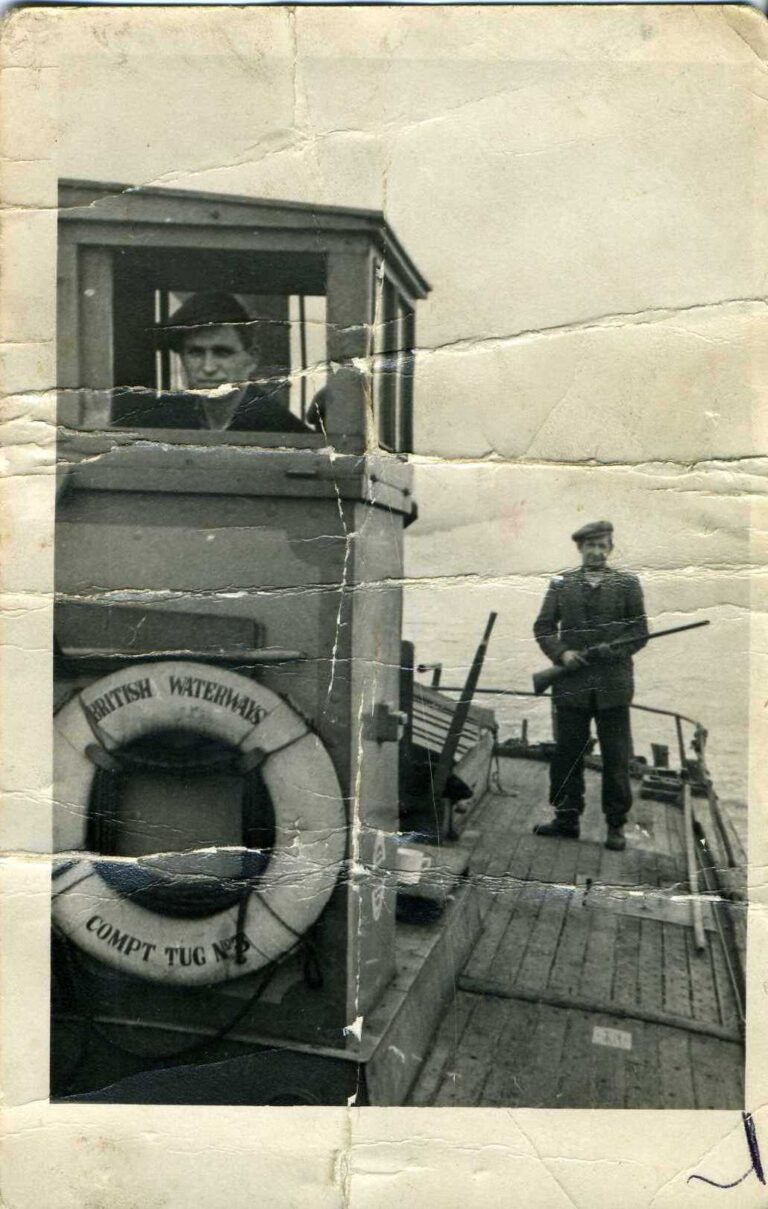
The Sherburns explain how the tug crew used to supplement their rations with whatever they were able to acquire “for the pot”.
Tape 21j - Feeding the crew SHERBURN, GOFF and EILEEN.mp3: Audio automatically transcribed by Sonix
Tape 21j - Feeding the crew SHERBURN, GOFF and EILEEN.mp3: this mp3 audio file was automatically transcribed by Sonix with the best speech-to-text algorithms. This transcript may contain errors.
Eileen Sherburn:
I'm laughing because they used to...Patto used to take his shotgun and and he used to shoot rabbits and game. And they used to have a pot going.
Goff Sherburn:
Shackle pot which we used to call it. So everything in it, everything that you got.
Eileen Sherburn:
I don't know if I should say, but you used to get turnips and carrots out of farmers' fields.
Goff Sherburn:
No. That's right. Why not?
Interviewer:
They used to have a.
Goff Sherburn:
It was a way of life. We was water gypsies.
Eileen Sherburn:
Water gypsies, really.
Goff Sherburn:
We was water gypsies, was called water gypsies, all watermen was called water gypsies. So...
Goff Sherburn:
So it was a way of life.
Interviewer:
It was a case of survival, really?
Goff Sherburn:
That's right. Yeah. You see, when I first started, you had seaman's ration, estuarial seaman's ration books. You could go and knock....
Interviewer:
Seaman's sorry?
Goff Sherburn:
Estuarial Seaman's Ration Books. You could go and knock at any policeman's door in the village, and he would go and knock the store up for you to get your rations, no matter what time it was. So, you know, we are talking about rationing days and things like that, but as I says, it was a way of life. What's that, in the bag? That's it. You could sit, really? You could sit and talk for hours and hours and hours. And I think I could, providing you keep fresh in your memory, you can bring more and more out because there's a hell of a lot. There's a wealth there. Uh. All little things.
Sonix is the world’s most advanced automated transcription, translation, and subtitling platform. Fast, accurate, and affordable.
Automatically convert your mp3 files to text (txt file), Microsoft Word (docx file), and SubRip Subtitle (srt file) in minutes.
Sonix has many features that you'd love including enterprise-grade admin tools, collaboration tools, world-class support, automated subtitles, and easily transcribe your Zoom meetings. Try Sonix for free today.
NOTES
There are no additional notes yet.
Source
This recording was among a number of cassette tapes found in the loft at the former Yorkshire Waterways Museum (YWM) building and donated to this Society by Spicer’s Auctioneers. Those tapes had themselves originally been donated to the YWM so we have full confidence that this Society has had all necessary permissions to publish their contents for the benefit of all students of life on the waterways of Yorkshire.
Become a Supporter
Since 2023 there has been no charge for membership of the Society. You will be sent our regular email newsletter telling you what's new and coming soon. To register simply fill in the form and click Subscribe today!
Donate
Your help and donations in keeping the society, it's research and website running are much appreciated!